
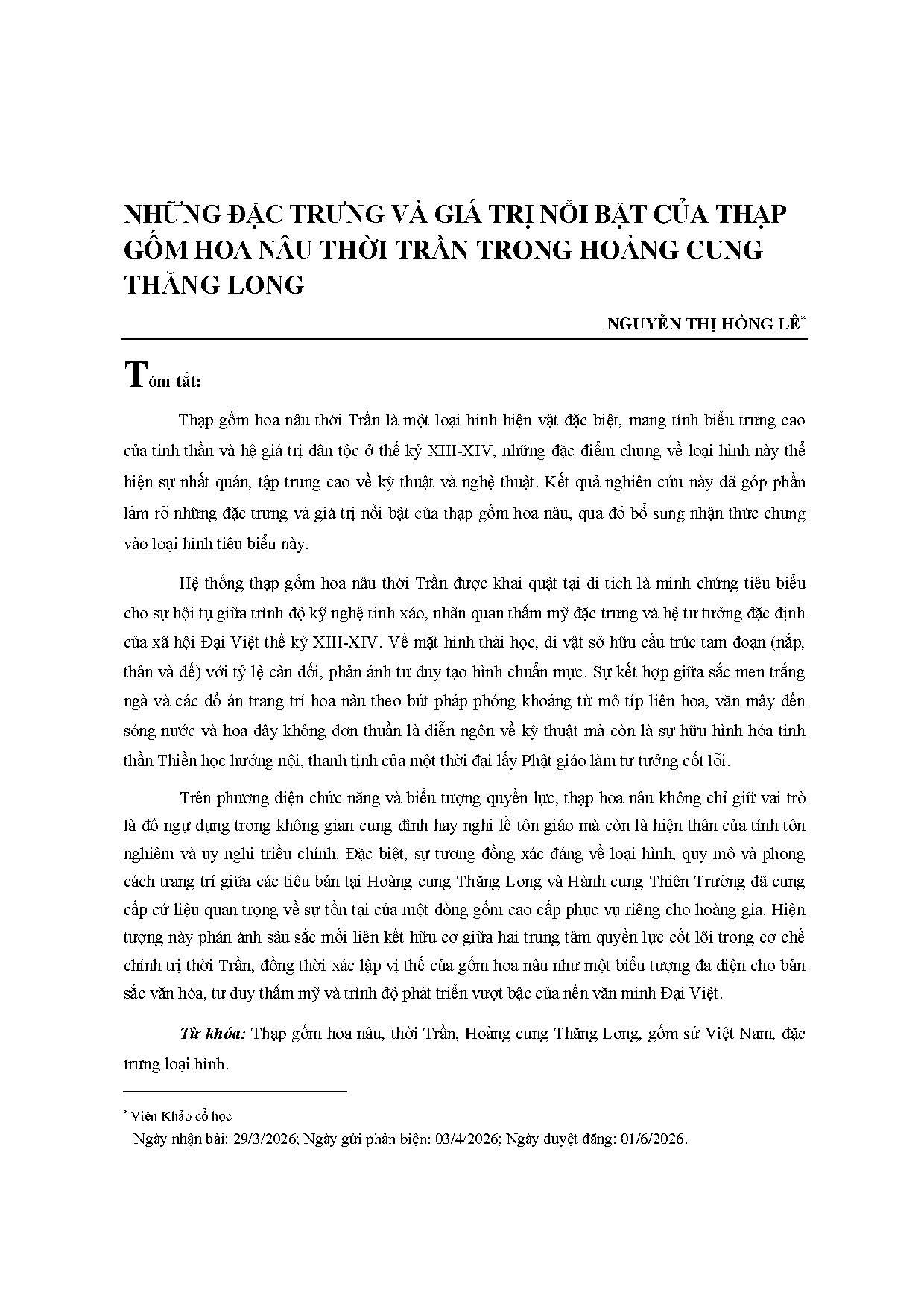
Chinese Song dynasty porcelain at the Thăng Long imperial Citadel: Ceramic traditions and technological exchange
Keywords:
Thăng Long Imperial Citadel; Chinese Song-dynasty ceramics; Lý-dynasty porcelain; Lý-Song diplomatic relations; spectroscopic analysis; technological interaction and cultural adaptation.Abstract
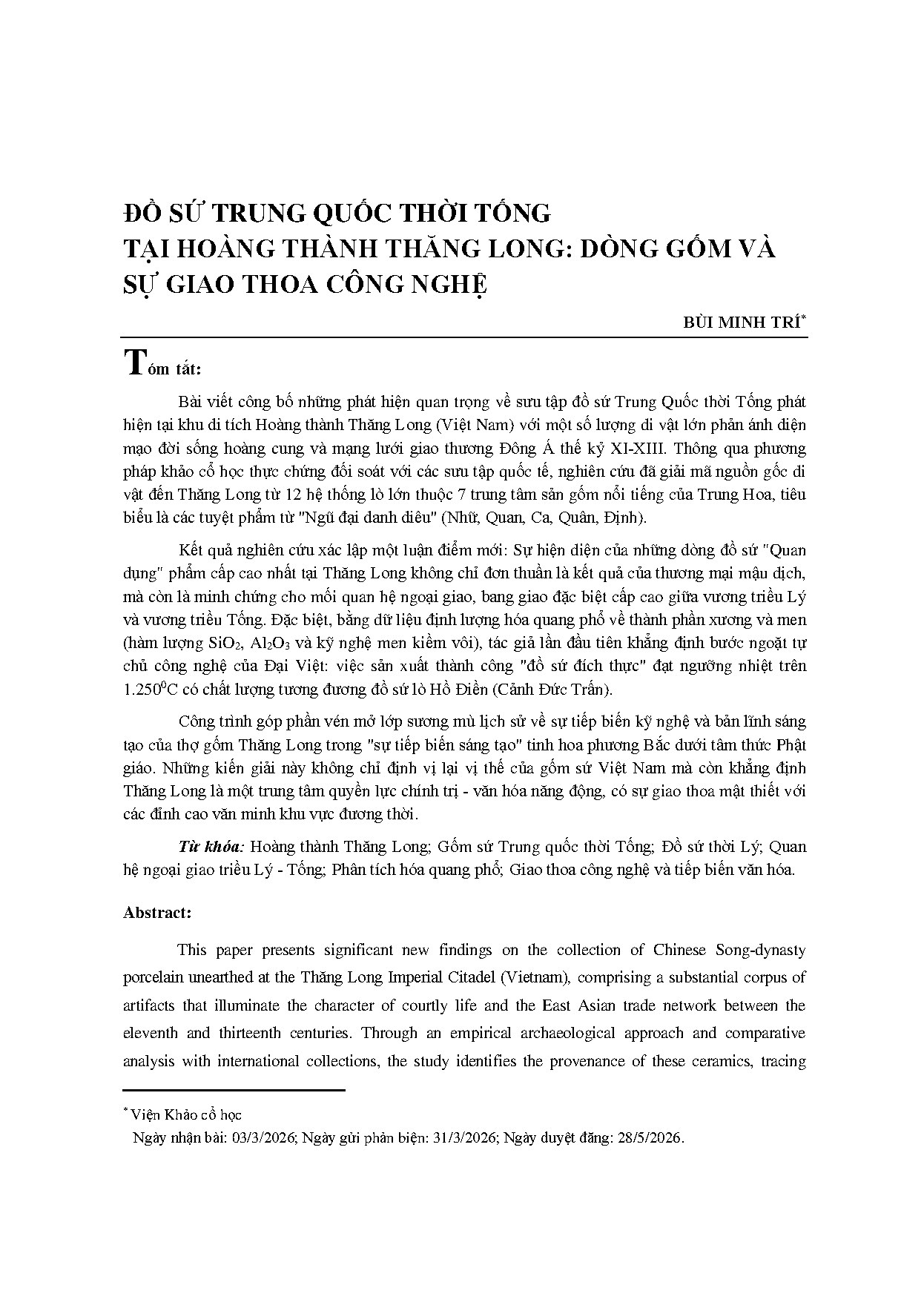
This paper presents significant new findings on the collection of Chinese Song-dynasty porcelain unearthed at the Thăng Long Imperial Citadel (Vietnam), comprising a substantial corpus of artifacts that illuminate the character of courtly life and the East Asian trade network between the eleventh and thirteenth centuries. Through an empirical archaeological approach and comparative analysis with international collections, the study identifies the provenance of these ceramics, tracing them to twelve major kiln systems associated with seven renowned ceramic production centers in China, including masterpieces from the celebrated “Five Great Kilns” (Ru, Guan, Ge, Jun, and Ding).
The research advances a new interpretation: The presence at Thăng Long of the highestgrade imperial-use porcelains (Quan yong) cannot be explained solely through commercial exchange, but should also be understood as material evidence of a particularly close diplomatic relationship between the Lý and Song courts. More importantly, through quantitative spectroscopic analyses of ceramic bodies and glazes-including measurements of SiO₂ and Al₂ O₃ content, as well as the characterization of lime-alkaline glaze technology-the author demonstrates for the first time a decisive breakthrough in the technological autonomy of Đại Việt. Local potters successfully produced “true porcelain” fired at temperatures exceeding 1,2500C, achieving a quality comparable to that of porcelains from the Hutian kilns of Jingdezhen This study sheds new light on the historical processes of technological transmission and innovation, revealing the creative agency of Thăng Long potters in adapting and transforming northern ceramic traditions within a Buddhist cultural milieu. These findings not only redefine the position of Vietnamese ceramics in the broader history of East Asian ceramic production but also reaffirm Thăng Long’s status as a dynamic political and cultural center closely connected to the foremost civilizations of its time
Downloads
Download data is not yet available.
References
Additional Files
Published
2026-07-20
Issue
Section
Các bài báo







 TẠP CHÍ KHẢO CỔ HỌC - Vietnam Archaeology